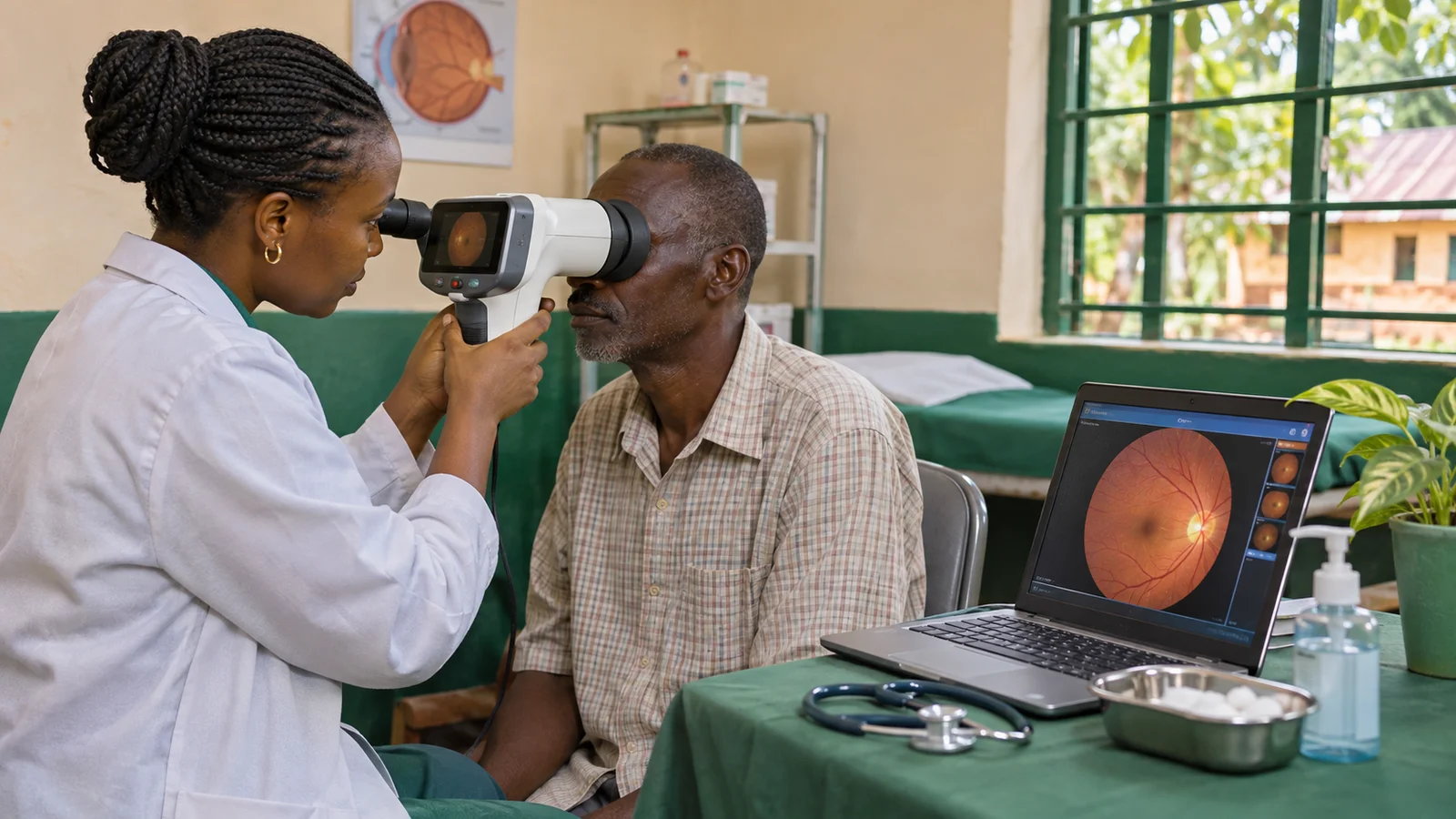
In June 2024, Kenya's transition committee recommended keeping the National Health Insurance Fund running past its planned 1 July shutdown. The Star reported that dry runs of the new Social Health Authority's IT system, piloted in Marsabit, showed it was not ready, and that the health information system had not reached all facilities, partly for lack of electricity and internet connectivity.
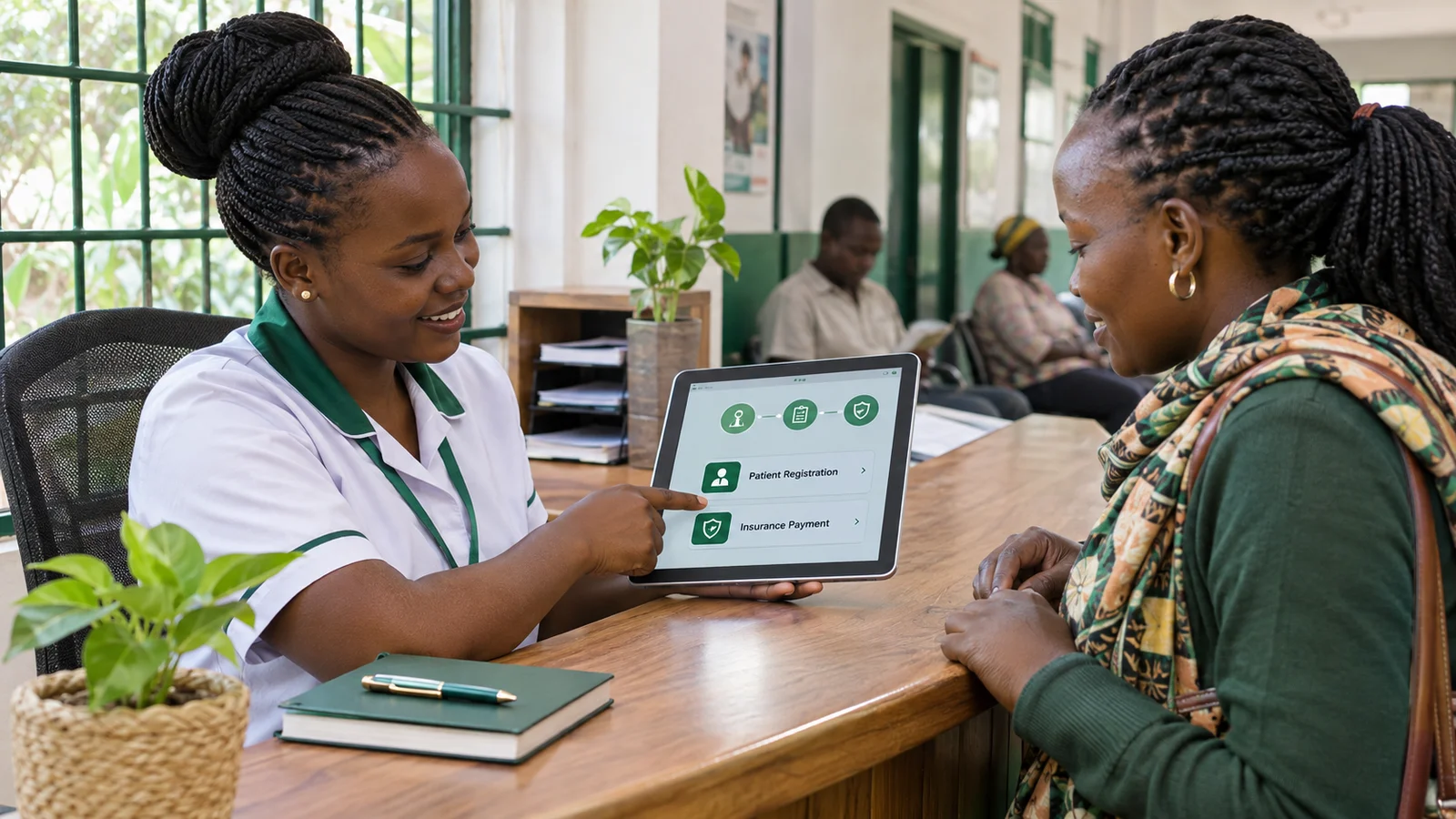
The Social Health Authority (SHA) launched on 1 October 2024 under the Social Health Insurance Act, 2023. A year later, Health Cabinet Secretary Aden Duale put enrollment at 27,007,879 people, The Star reported in October 2025. The same report noted that health facilities had flagged delayed reimbursements.
Kenya's reform changed who pays for care. It reached patients through software: registration, eligibility, claims, and payment to hospitals. This article is for a health-sector company building or scaling in markets like Kenya, Nigeria, or India: a hospital group, a pharmacy or diagnostics chain, an insurer, or a software vendor serving them. Its argument is simple. Start with who pays and how their systems work. Then design the software.
The donor share is shrinking
On 1 July 2025, the US Agency for International Development stopped administering foreign assistance and its remaining programs moved to the State Department. NPR reported Secretary of State Marco Rubio's statement that more than 80 percent of USAID's programs had been terminated. In July 2025, Congress rescinded $7.9 billion of previously enacted State and foreign operations funding, most of which would have funded USAID-administered programs, according to the Congressional Research Service.
For a health technology company, the lesson is about concentration. A product, or a customer program, that depends on one external funder can lose its budget in a single decision made outside the country.
Domestic budgets have not filled the gap. In the 2001 Abuja Declaration, African Union governments pledged to spend at least 15 percent of their budgets on health. Human Rights Watch reported in 2024 that only two of the AU's 55 member states, Cabo Verde and South Africa, met that target in 2021.
What to do: list every source of money behind your revenue, including the money behind your customers' budgets. If a large share traces back to one grant or one donor, plan for its end now.
Insurance is becoming the buyer
Kenya and Nigeria are both moving health spending into insurance schemes that pay providers through claims.
- Kenya. The Social Health Insurance Act, 2023 replaced the NHIF framework with the SHA and three funds, including the Social Health Insurance Fund and a Primary Healthcare Fund.
- Nigeria. The National Health Insurance Authority Act, signed in May 2022, turned the old scheme into an authority and requires every resident to obtain health insurance. In September 2025, Nairametrics reported, President Tinubu ordered federal ministries, departments, and agencies to implement it. Nigeria had about 232.7 million people in 2024, according to the UN's World Population Prospects 2024.
A mandate does not mean coverage or prompt payment. It does mean the institution that decides whether a provider gets paid now runs software, sets data formats, and publishes rules. For a hospital group, a pharmacy chain, a diagnostics network, or a software vendor serving them, that institution's systems are now part of your own.
What to do:
- Get the payer's claims, eligibility, and pre-authorization specifications before you design your billing workflow.
- Build reconciliation from day one: what was claimed, what was approved, what was paid, and when.
- Model your cash position with the payer's real payment times, not its published ones.
An illustrative example, with made-up numbers: a clinic network bills $200,000 a month to a public scheme. If payment arrives in 90 days instead of 30, the network needs about $400,000 more working capital to keep paying staff and suppliers. A product that shortens claim rejections or speeds reconciliation is solving a cash problem, and that is how a finance director will judge it.
Public systems set the interfaces
Many governments run the core health information system themselves, and new products are expected to connect to it.
Kenya's Digital Health Act, 2023 created a Digital Health Agency and provides for a comprehensive integrated digital health information system. Its long title also covers a framework for providing digital health services, and commentators note that it addresses the privacy and security of health data.
India's Ayushman Bharat Digital Mission issues each person a health account number (ABHA) that links their records across providers. All India Radio reported in May 2026 that more than 90 crore (900 million) ABHA accounts had been created.
DHIS2, an open-source health management information system led by the HISP Centre at the University of Oslo, is used by ministries of health in more than 80 countries, according to DHIS2.
For a builder, a national system is both a dependency and a channel. It is a dependency because your product may have to report to it, read from it, or use its identifiers. It is a channel because a product that fits the ministry's system is easier for a district or a public hospital to approve.
What to do: before writing an integration, find out which national registries (patients, facilities, health workers) and reporting systems apply in your market, and which data standards they accept. Ask the agency directly; published specifications are often behind current practice.
Data law applies to health data first
Kenya's Data Protection Act, 2019 defines health status as sensitive personal data and has a section on processing health data; the Digital Health Act adds health-specific rules. Nigeria's Data Protection Act, 2023 also lists health status among sensitive categories, according to the Future of Privacy Forum's summary. India has the Digital Personal Data Protection Act, 2023, with rules notified in November 2025 and phased in over the following 18 months.
These laws set conditions on consent, storage, sharing, and transfer abroad. How they apply depends on what you hold and where you host it. Ask a qualified lawyer in each market before you choose a hosting region or sign a data-sharing agreement with a payer.
What separates products that last
Three design choices follow from the financing picture.
Price for the payer you have. A public scheme, a private insurer, an employer, a hospital group, and a patient paying out of pocket all buy differently and pay on different timelines. Decide which one is your customer and design the commercial terms for them.
Make the administrative work smaller. Eligibility checks, claims, coding, and reconciliation are where Kenya's facilities reported trouble, in the form of delayed reimbursements. Products that reduce that load have a buyer who can see the result in cash.
Plan for weak connectivity at the facility. The Star's report on SHA's delay named missing electricity and internet at facilities as a reason the health information system was not everywhere. Build offline capture and later sync into the first version.
Questions to answer before you build or buy
- Who pays for this product, and where does that payer's money come from?
- What happens to your revenue if a donor program ends next year?
- Which national systems and payer systems must you connect to, and in what formats?
- What are the payer's actual payment times, and can your customers carry them?
- What does counsel say about storing and sharing health data in each market you serve?
Answer the first two before writing a line of code. They decide whether there is a business at all.
GradeCircle builds and runs six products of its own: AfroSynergy, CallerBridge, HealthSquire, Heyzl, Lexfora, and LukeAPI, two of them in beta. The assumptions in our models come from operating those systems, not from a framework. See what we run.
If you are building or scaling in these markets, see how GradeCircle approaches AI implementation.