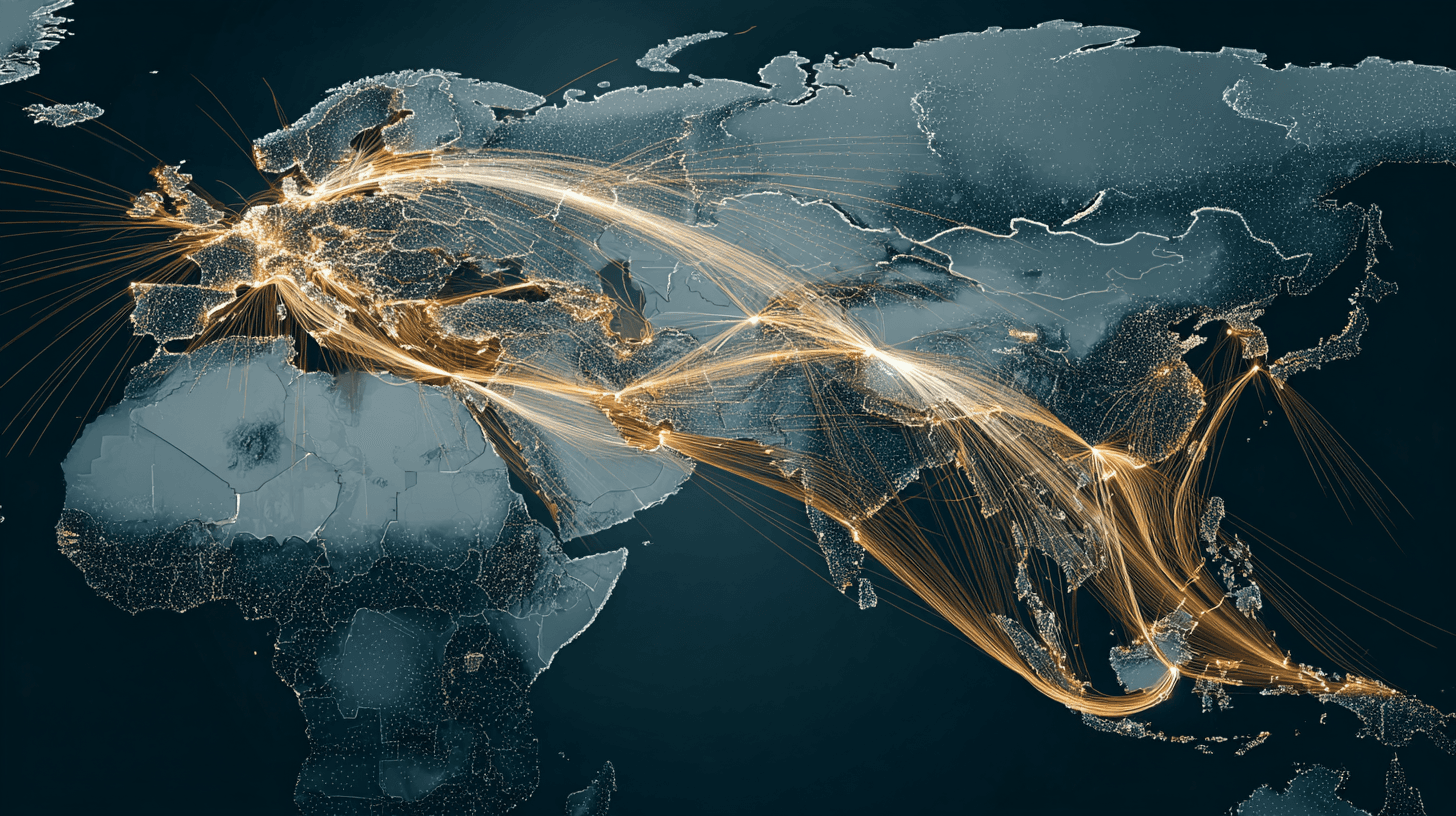
The SME Finance Forum and the World Bank Group put the finance gap for formal micro, small, and medium enterprises in emerging and developing economies at $5.7 trillion, about 19 percent of those economies' GDP. That figure comes from their MSME Finance Gap report of March 2025, and it uses 2019 data. The 2017 edition of the same study had put the gap at $5.2 trillion.
The money exists. What is missing is the information a bank needs before it will lend. Most small firms in these markets have no audited accounts, no land title to pledge, and no bureau file. Many of them do have something a bank never asked for: years of mobile money records. The World Bank's Global Findex 2025 found that about 40 percent of adults in sub-Saharan Africa had a mobile money account in 2024, up from 27 percent in 2021.
Why banks decline viable small firms
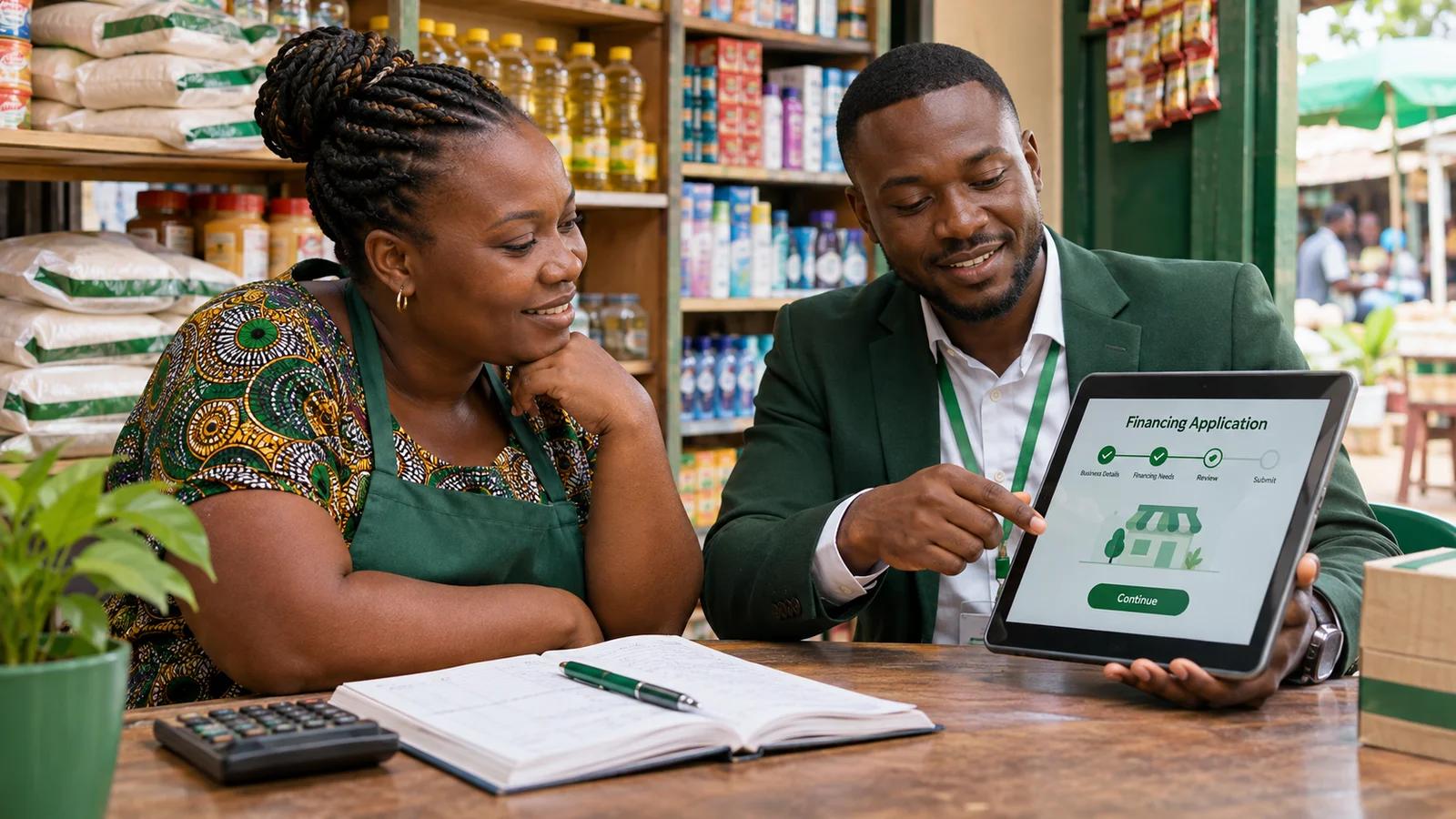
Take a trader who has sold goods from the same market stall for ten years. She has no financial statements, no title deed, and no account history at a bank. A loan officer sees nothing to underwrite. Her business is real; the paperwork is not there.
Three problems stack up behind that decision.
- Documents. Traditional SME underwriting asks for audited statements, tax records, registration papers, and collateral. A firm that has some but not all of these is treated as if it had none.
- Cost to serve. Reviewing a file, visiting a site, and taking a loan to committee costs roughly the same whether the loan is large or small. Small loans carry the same fixed cost on far less revenue, so banks lend at the top of the size range and leave the rest to microfinance and informal lenders.
- Collateral. Where land registries are incomplete and equipment is hard to repossess, banks ask for assets most small firms cannot pledge. The bank's information problem becomes the borrower's problem.
A credit model built on other data attacks the first two directly. It reads records that already exist, and it costs almost nothing per extra decision once it runs.
The data lenders score instead
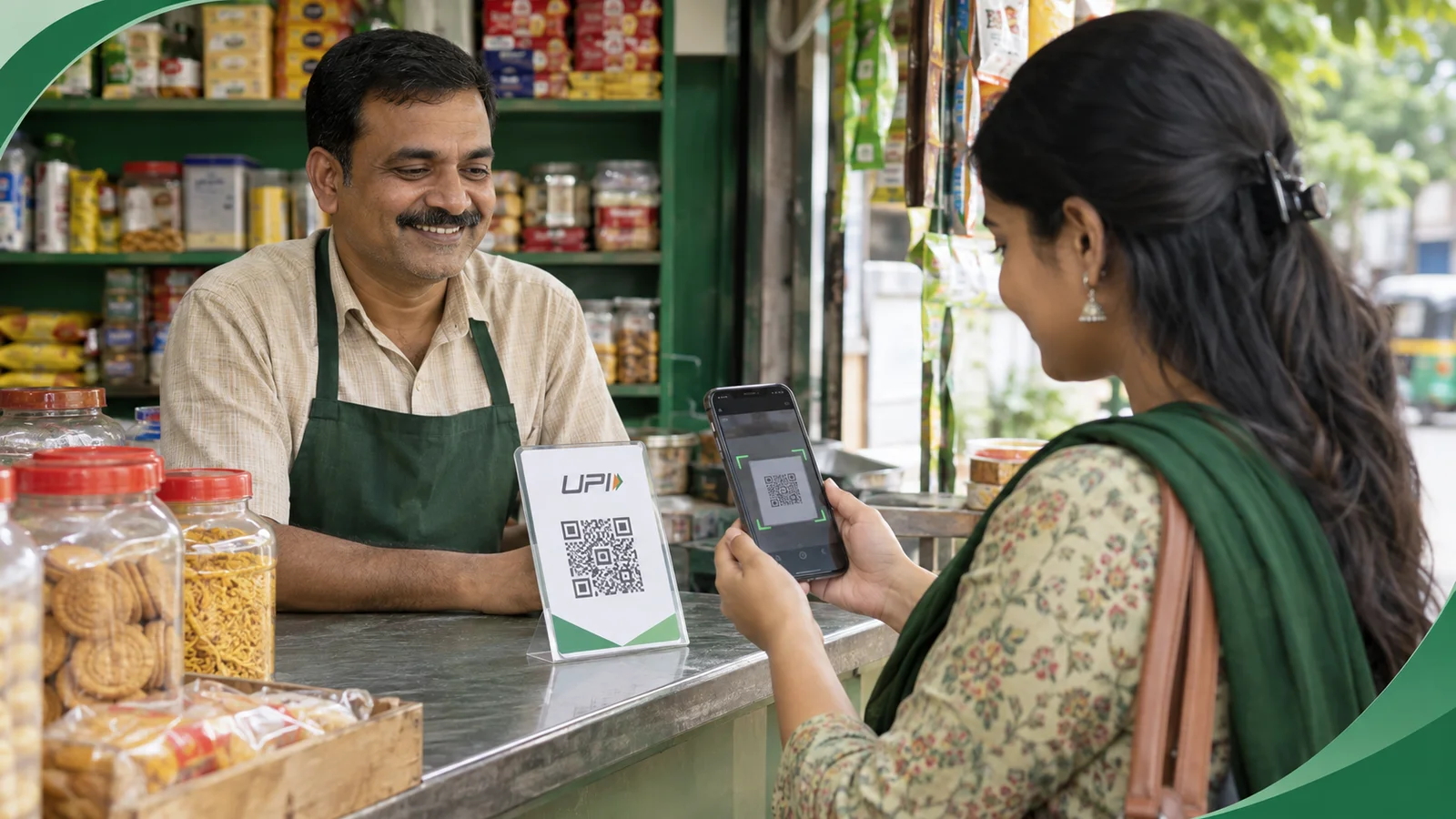
Kenya shows the pattern. In November 2012, Safaricom and Commercial Bank of Africa launched M-Shwari, a savings and loan account inside the M-Pesa wallet. Launch coverage described the split: the bank did the credit work and carried the risk, and Safaricom supplied the platform and the customer data. A customer's M-Pesa history stood in for a credit file. In January 2019, Safaricom extended the idea with Fuliza, an M-Pesa overdraft offered with KCB and CBA, with limits set from M-Pesa transactions.
The inputs most lenders in these markets draw on:
- Mobile money transactions. Regularity of inflows, spending patterns, bill payments, and the breadth of the payment network. For many small firms this is the most complete financial record that exists.
- Airtime and data purchases. How often someone tops up, and whether the phone runs dry, are behavioral signals some models use.
- Merchant and point-of-sale data. A shop's daily sales through a digital till are harder evidence of revenue than a stated monthly figure.
- Supply chain records. Purchase orders, payment terms, and how long a buyer-supplier relationship has lasted, taken from B2B ordering and distribution platforms.
- Utility payments. Where bills are paid digitally, payment discipline on small recurring amounts.
- Device and app data. Phone type, app usage, and contact list size. Some models use these. They raise the hardest consent and fairness questions, and several regulators now restrict them.
Consumer lenders such as Tala and Branch score applicants from data on the borrower's phone. Pezesha, a Kenyan company, applies the approach to small businesses: TechCrunch reported in August 2022 that its credit-scoring APIs sit inside partner platforms, that more than 100,000 businesses had received loans through those partners, and that loans went up to $10,000.
Distribution decides the economics
Pezesha's model points at the structural choice that matters most. A standalone lending app has to find every borrower and pay to acquire each one. An embedded lender sits inside a platform the business already uses: a wholesale ordering app, an inventory tool, a payment till. The platform collects transaction data as a by-product of its main job. The credit offer appears at the moment the business needs stock.
That arrangement changes three things at once. Acquisition cost is shared with the platform. Repayment can be tied to the flow of future orders. And every new transaction updates the data the model reads, so the lender does not depend on a yearly refresh.
If you run a platform with small business users in these markets, your transaction log is the asset. Before you build a lending product, check whether that data is complete enough, and consented for credit use, to support one.
Regulators have caught up
Early digital lending in East and West Africa ran ahead of the rules. Since 2022, the rules have arrived.
- Kenya. The Central Bank of Kenya published its Digital Credit Providers Regulations in March 2022 and issued the first licenses that September. By July 2026, AllAfrica reported, 252 digital lenders were licensed out of more than 800 applications. Licensed lenders must meet rules on data confidentiality, full cost disclosure, and fair debt collection.
- Nigeria. The Federal Competition and Consumer Protection Commission's Digital, Electronic, Online, or Non-Traditional Consumer Lending Regulations took effect on 21 July 2025. They cover digital lenders whether Nigerian or foreign, and set rules on registration, disclosure, data privacy, and recovery practices.
- India. The Reserve Bank of India's Digital Lending Directions, 2025, issued on 8 May 2025, replaced its 2022 digital lending guidelines. They keep the requirement for a Key Fact Statement before a loan contract is signed.
Data protection law sits on top of lending rules: Kenya's Data Protection Act 2019, Nigeria's Data Protection Act 2023, and India's Digital Personal Data Protection Act 2023. Which of these apply to your product, and how, is a question for a qualified lawyer in each market. Ask it before you design the data pipeline, because consent terms decide which of the inputs above you may use at all.
Design choices that decide the outcome
Using AI does not make a credit product fair or sustainable. Four choices do, and each one has to be made on purpose.
Test for bias before launch
A model trained on past repayment data learns from past lending. If women-owned or rural businesses received less credit in the past, the model has fewer examples of them and may score them lower at the same real risk. Compare approval rates and score distributions across gender, region, and sector before launch, and again after each retraining.
Check debt load, not only ability to repay
A model can answer "will this borrower repay?" and still miss "should this borrower take on more debt?" Where the data shows existing obligations, use it to decline or cap loans that would overload the borrower. This costs volume early and protects the repeat borrowers a lending book depends on.
Explain every decline
Tell a declined applicant which factors drove the decision and what would change it. A generic refusal loses the borrower who would have come back with a stronger record. In some markets, explanation is also a legal duty; check which.
Collect in proportion
Kenya's and Nigeria's rules both regulate how lenders collect. Start with SMS, WhatsApp, and in-app reminders. Offer restructuring to borrowers in genuine distress. Never contact a borrower's phone contacts.
Before you build
If you are planning a credit product for small businesses in Africa, Asia, or the Middle East, settle these questions in this order:
- Data. Which of the inputs above do you hold, how many months of history, and under what consent?
- License. Do you need your own lending license, or will a licensed partner hold the loans, as CBA did for M-Shwari?
- Distribution. Will the offer sit inside a workflow the business already uses, or will you pay to acquire each borrower?
- Controls. Who runs bias testing, debt-load checks, decline explanations, and collections, and how often is each reviewed?
- Stop rule. What default rate, or what regulatory finding, would make you pause lending? Write it down before the first loan goes out.
A model that is accurate on historical data can still fail on these five. Most of the work is in them.
GradeCircle builds and runs six products of its own: AfroSynergy, CallerBridge, HealthSquire, Heyzl, Lexfora, and LukeAPI, two of them in beta. The assumptions in our models come from operating those systems, not from a framework. See what we run.
If you are building or scaling in these markets, see how GradeCircle approaches AI implementation.